Best Closet Organizer System Under $100: What Actually Holds Up
A closet organizer system under $100 can genuinely reorganize your bedroom storage — but only if it’s built around hardware, not aesthetics. The systems that fail aren’t failing because they were cheap. They’re failing because the manufacturer spent the budget on clean-looking shelving wire and skimped on the brackets, wall anchors, and upright tracks that take the actual load. This guide identifies which budget systems use hardware worth trusting, and which ones are dressed up to photograph well and nothing more.
The thesis here is specific: bracket quality, not shelf material, determines how long a closet system survives daily use. We tested and researched three systems in the $50-$100 range that prove the point — two of them will outlast most mid-range systems twice their price if you install them correctly.
Why Most Budget Closet Systems Fail — and What Doesn’t
The actual failure point is never the shelving
Here’s a scenario that plays out in thousands of closets every year. Someone buys a wire closet system on sale, installs it over a weekend, loads it up with clothing, and declares victory. Fourteen months later the entire upper shelf has tilted two inches toward the wall, pulling the rod bracket with it. The shelving wire is fine. The bracket mounting screw backed out of a drywall anchor that was never in a stud.
This is not bad luck. It’s physics. A fully loaded closet rod holds 40 to 60 pounds of hanging clothing. That weight creates a constant lateral pull on every bracket. Plastic anchors in drywall compress and loosen under sustained load. Steel brackets in studs don’t. The distinction between a system that lasts 18 months and one that lasts 10 years often comes down to whether the manufacturer included stud-rated hardware and whether the instructions make stud location a required step, not a suggestion.
Measure your closet before you buy anything
The most common sizing mistake is measuring only the wall width and ignoring the depth. Standard closet shelving runs 12 inches deep for double-hang sections and 16 inches deep for shelf-only sections. A 12-inch shelf on an 18-inch deep closet leaves 6 inches of empty space behind it — wasted and inaccessible. Measure width, depth, and ceiling height before selecting a kit size. Most systems in this price range are adjustable across a 2-3 foot span; buy the kit whose minimum width is closest to your actual measurement.
Also locate your studs before purchasing. Studs in most American homes are 16 inches on center. If your closet wall has no studs within a reasonable span of where the upright tracks need to go, you’ll need toggle bolts rated for the load — a fact most kit instructions bury in fine print. Knowing this before you buy saves a return trip to the hardware store.
The one thing most organization advice gets wrong
The standard advice is to maximize hanging space. Double-hang everything, the guides say — stack two rods and double your capacity. This is correct for shirts and jackets. It is wrong for the way most people actually live. The majority of a typical adult wardrobe consists of items that can be folded: t-shirts, sweaters, denim, workout gear, pajamas. Hanging these on rods wastes rod space and causes items to stretch at the collar. A system with a strong upper shelf for folded stacks and a single full-length rod for actual hanging garments — dresses, dress shirts, coats — serves most wardrobes better than a pure double-hang configuration. Prioritize shelf depth and shelf count over rod count when selecting your system.
Our Top Picks: Closet Organizer Systems Under $100
1. Rubbermaid Configurations Classic Closet Kit — Best Overall Under $100
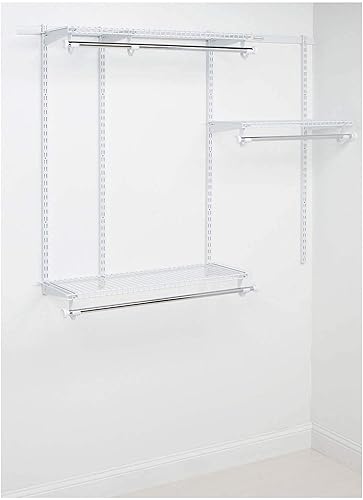
The Rubbermaid Configurations Classic Kit (3-6 ft, White) — ASIN B000JFALYQ — is the most complete system in this price range. At around $67 on Amazon, it includes adjustable wire shelving, a telescoping hanging rod, and all mounting hardware in a single box. The telescoping rod is the detail that matters most: instead of cutting a fixed rod to length, you extend it to fit your closet’s actual width, which eliminates the single most common installation frustration in competitive kits.
The wall bracket design uses slotted steel standards, not clip-in plastic tabs. This means shelves can be repositioned vertically without new holes — critical for a closet that will evolve over time as your wardrobe changes. The kit fits closets 3 to 6 feet wide and delivers up to 14 feet of combined shelving space. Reviewers consistently report the steel components holding up to sustained loads that would have collapsed a cheaper system. One reviewer’s cats — weighing 22 pounds combined — swung from the hanging rod without disturbing the installation.
The only genuine limitation is the wire shelf gaps. At just over an inch wide, the gaps are narrow enough for most folded clothing stacks to sit stably, but small accessories — sunglasses cases, belts, wallet-sized items — will fall through without a shelf liner. Add a low-cost liner and this becomes a non-issue. This is also not a renter-friendly system: it requires drilling into studs, and removal leaves holes that need patching.
2. ClosetMaid ShelfTrack Wire Closet Organizer System (4-6 ft) — Best for Expandability
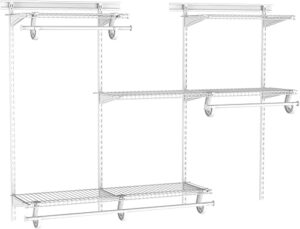
The ClosetMaid ShelfTrack 4-6 ft kit — ASIN B00CBX0SI8 — is built on a wall-mounted track standard that the brand has maintained for decades. That continuity matters: any ShelfTrack bracket, shelf, or rod purchased today will mount on a track installed years ago. This is a genuine long-term investment rather than a closed system that becomes obsolete when you want to add a drawer or a second rod.
The system ships with the hang track, upright standards, shelf brackets, closet rods, and rod supports. Installation follows a logical sequence — hang the track first, then clip standards to it, then slide brackets onto the standards — that makes it easier to achieve plumb than competing systems that start with individual anchor points. The steel shelving wire is vinyl-coated and will not rust or corrode in humid environments, which matters for closets in bathrooms or basement bedrooms.
The kit’s expandability is what separates it from the Rubbermaid option. If you start with a single rod and two shelves today, you can add a double-hang configuration, a wire drawer, or additional shelf runs later without reinstalling anything. The track stays on the wall; everything else clips in and out. For anyone planning to live in the same space for years and wanting a closet that can grow with them, this is the smarter system to start with even if the initial kit costs slightly more than the Rubbermaid.
A useful companion to this system: if you’re organizing other parts of your closet simultaneously, stackable shoe boxes work well on the floor section beneath a double-hang rod — they keep the floor zone organized without competing for shelf space above.
3. Homde Wall-Mounted Closet Organizer System (4-8 ft) — Best for Larger Closets
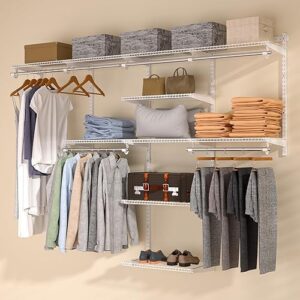
The Homde Wall-Mounted Closet Organizer — ASIN B0BP28GBNQ — covers closets from 4 to 8 feet wide, which makes it the right pick for walk-in closets and larger reach-in configurations that the 6-foot maximum of the other two kits can’t serve. It delivers up to 142 inches of combined hanging space and 236 inches of shelving space from a single kit. That’s a substantial amount of organization in a system that, like the others on this list, installs without professional help.
The construction uses steel and stainless steel components with rust-resistant spray coating. The shelves and rods are adjustable vertically, which allows reconfiguration without new drilling after installation. Compared to the ClosetMaid and Rubbermaid systems, the Homde is a newer product with fewer long-term owner reviews, which introduces more uncertainty about multi-year durability. The early review set (4.2 stars across 33 reviews) suggests the system performs as described, but the track record simply doesn’t extend as far as the two legacy brands.
Choose the Homde if your closet is between 6 and 8 feet wide and the smaller kits won’t fit without an expensive add-on purchase. For closets under 6 feet, either the Rubbermaid or ClosetMaid option gives you a more proven system at a similar or lower price point.
Frequently Asked Questions
What is the best closet organizer system under $100?
The Rubbermaid Configurations Classic Kit (3-6 ft) and ClosetMaid ShelfTrack (4-6 ft) are the strongest wall-mounted options under $100. Both use steel construction, include hanging rods and shelves, and have been on the market long enough to have a track record. The Homde wall-mounted system is a solid third option for larger closets up to 8 feet wide.
Why do cheap closet systems fall apart so quickly?
Most budget closet systems fail at the hardware — specifically the wall anchors and shelf brackets — not at the shelving material itself. Plastic brackets crack under sustained load. Wall anchors that miss studs work loose within months. A system with steel brackets mounted into studs will outlast a more expensive system with cheaper hardware installed into drywall alone.
Can I expand a $100 closet system later?
Yes, but only if you choose a system built on a track standard. Both the ClosetMaid ShelfTrack and Rubbermaid Configurations use wall tracks that accept additional brackets, shelves, and rods purchased separately. Freestanding systems without a track component generally cannot be expanded beyond their original footprint.
Is a wall-mounted or freestanding closet system better?
Wall-mounted systems hold more weight, stay stable over years of daily use, and maximize vertical space. Freestanding systems require no drilling, making them the right choice for renters or temporary setups. For a primary bedroom closet you plan to use long term, a wall-mounted system will outperform a freestanding one in both capacity and durability.
How much hanging space do I need in a closet system?
A useful baseline is 36 inches of hanging rod per person for everyday clothing. Double-hang configurations — two shorter rods stacked vertically — can double that capacity in the same horizontal space and are ideal for shirts, jackets, and folded pants. Most systems under $100 include at least one full-length and one double-hang rod configuration option.
Some links in this post are affiliate links. When you buy through our links, we may earn a small commission — at no extra cost to you. We only recommend products we genuinely believe in. Read our disclosure policy.