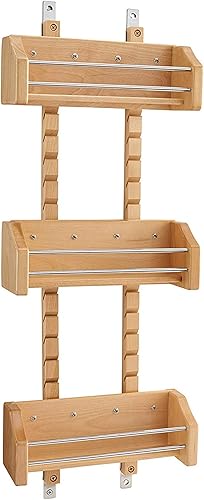
Best Spice Rack Organizers for Kitchen Cabinets
Here is a scene that plays out in almost every American kitchen: you open a cabinet, push aside six bottles you haven’t touched in a year, and still can’t find the cumin. You buy a new jar. Later you discover two more behind a bag of rice. That collection of forgotten, expired, or duplicated bottles is what I call the spice graveyard — and it’s the real problem a spice rack organizer has to solve, not just “how do I fit more bottles in here.”
Most spice rack roundups jump straight to the product list. Browse ten racks, pick the prettiest, order it, and hope for the best. That approach is why so many organizers end up at Goodwill within a year. The right organizer depends on two things you can measure in under five minutes: how many spices you actually use, and the exact dimensions of the cabinet opening where the rack will live.
In this guide, we’ll walk through those measurements first, then look at three well-tested organizers that cover the most common USA kitchen situations — a pull-out drawer, a tiered shelf, and a wall-mount option. We’ll also tell you about the mistake we made the first time around, and why more compartments is not always better.
The Measurement-First Rule
Before you open Amazon, do this: pull every spice bottle out of your cabinet and put them on the counter. Throw away anything expired (check the “Best By” date — spices typically last 2–3 years ground, 3–4 years whole). Now count what’s left. If you have fewer than 15 active bottles, you probably don’t need a 30-slot rack. If you have 30+, a small turntable won’t cut it.
Next, grab a tape measure. Standard upper kitchen cabinets in USA homes are 12 inches deep and 30–36 inches wide, with shelves spaced 10–14 inches apart. Lower cabinets are 24 inches deep. Write down three numbers:
- Cabinet opening width — measure inside the frame, not the door width
- Shelf depth — how far back the shelf goes (12″ for uppers, 21–23″ usable in lowers)
- Clearance height — vertical space between your shelf and the one above
Standard spice bottles are 2.5–3 inches tall for jars, and 4.5–5 inches tall for larger bottles like McCormick 3.12 oz. If your clearance is under 5 inches, tall bottles won’t stand upright on a tiered shelf. A pull-out drawer or a wall-mounted rack on the inside of a door solves this. If your clearance is 10 inches or more, a two- or three-tier shelf gives you excellent visibility without any installation. These measurements take five minutes and will save you a return shipping label.
Also consider your cabinet type. Upper cabinets near the stove are the most common spice location. Lower cabinets next to the stove work if you install a pull-out rack that slides in on a drawer slide. If you have a pantry cabinet, a deeper tiered organizer makes more sense — see our guide to pantry organizer bins for a complementary approach.
Our Top 3 Picks
These three organizers cover the most common kitchen situations we hear about. Each one solves a specific measurement profile. Match your numbers to the right pick — don’t just buy the one with the most reviews.
1. Rev-A-Shelf 4ASR-15 Pull-Out Spice Rack
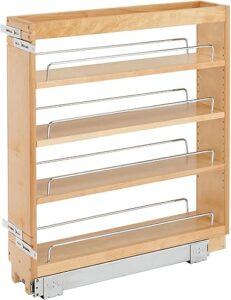
The Rev-A-Shelf 4ASR-15 is a pull-out spice drawer that mounts inside a base cabinet on full-extension ball-bearing slides. When you open it, you see all your spices facing you in rows — no digging, no pushing bottles aside. It’s designed for a 15-inch base cabinet opening, though Rev-A-Shelf makes it in 9″, 12″, 15″, and 18″ widths to fit most standard cabinet sizes.
Who it fits: You need at least 20 inches of cabinet depth (lower cabinets typically have this), a 14–15 inch interior width, and about 20 inches of clearance height for the drawer to pull out without hitting anything. The unit itself is 20.5 inches deep and 20.38 inches tall. If those numbers match your cabinet, this is the most functional spice solution available.
What works well: Visibility is unmatched — every bottle is visible and reachable in one pull. The full-extension slides feel solid, not wobbly. The wire shelves on the door portion hold 20–25 standard spice jars with no label reading required. Installation takes about 45 minutes if you’ve used a drill before. You don’t need a professional.
What to know before buying: This is a cabinetry modification, not a drop-in solution. You need to remove one cabinet shelf and mount the slides to the cabinet walls. Measure twice. Also note the door attachment — if your cabinet door has a center rail or decorative molding, the door attachment clips may need shimming. Rev-A-Shelf’s customer support is genuinely helpful if you hit a snag.
If you’re already using a lazy Susan organizer in a corner cabinet, the pull-out rack solves the same access problem in a straight base cabinet. Both eliminate the “reach to the back and guess” problem.
Check the Rev-A-Shelf 4ASR-15 on Amazon
2. SimpleHouseware 3-Tier Cabinet Shelf Organizer
The SimpleHouseware 3-tier spice shelf organizer is the no-installation option. You place it on an existing cabinet shelf and it immediately turns one shelf into three visible rows. It’s 9.25 inches wide, 6.5 inches deep, and 6.5 inches tall — compact enough for most upper cabinets above the stove.
Who it fits: If your upper cabinet has at least 10 inches of clearance and you have 15–30 spice bottles, this is your simplest path forward. No tools, no drilling, no permanent modification. You can also use two side by side in a 30″ cabinet for a fuller coverage. Bottle height limit is about 3.5 inches per tier — standard spice jars fit perfectly, but tall 4.5-inch bottles need to go on the top open tier.
What works well: The tiered design means you can see all three rows at once when you open the cabinet door. The steel construction doesn’t flex under load. It’s also easy to pull out the whole unit and wipe down the cabinet shelf underneath — something you can’t do with glued or mounted organizers.
What to know before buying: This organizer works best when the cabinet is dedicated primarily to spices. If you’re trying to also store small bags, bulk containers, or oils alongside spices, the organizer will get crowded quickly. In that case, consider whether a deep cabinet organizer approach might serve you better by zoning the cabinet properly first.
At under $20, it’s the lowest-risk entry point. If it doesn’t solve your problem completely, you haven’t lost much — and you’ll know whether you need a pull-out system.
Check the SimpleHouseware 3-Tier Spice Shelf on Amazon
3. Spectrum Diversified Wall-Mount Spice Rack
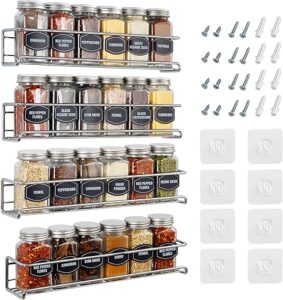
The Spectrum Diversified wall-mount spice rack is a two-tier wire rack that attaches to the inside of a cabinet door or to a wall beside the stove. It holds 18–20 standard spice bottles in two rows and keeps them completely off the shelf, freeing up the entire interior cabinet space for other things.
Who it fits: This rack is ideal when your cabinet has barely any usable shelf depth — for example, a narrow upper cabinet over a range hood — or when you want to keep the cabinet interior fully open for mixing bowls or other larger items. It also works on the inside of a pantry door if your spice collection is large enough to split into two locations. The mounting footprint is 12.9 inches wide and 3.75 inches deep, and it requires about 14 inches of door height.
What works well: No shelf space consumed at all. The wire design lets you see labels at a glance from the side. Installation takes about 20 minutes with a drill and the included hardware. It’s a good complement to a turntable or tiered shelf — put everyday spices on the door, less-used ones on the shelf.
What to know before buying: Door-mounted racks work on solid wood or MDF doors only — hollow-core doors won’t hold the screw anchors under the weight of full bottles. Check your door by knocking on it: solid sound = solid door. Also note that the rack moves when the door opens, which can rattle bottles if they’re overfilled. Keep the bottles no more than three-quarters full for quiet operation.
Check the Spectrum Diversified Spice Rack on Amazon
What We Got Wrong First
The first spice rack we bought for testing was a handsome bamboo turntable with 30 labeled slots arranged in a circle. It looked great on the counter. When we moved it into the cabinet, it didn’t spin — the cabinet wall stopped the rotation after about 120 degrees. The bottles were also too short for our larger McCormick jars, so we had to double-stack, which eliminated the visibility benefit entirely.
The lesson was simple in hindsight: we had picked the organizer based on a photo, not on measurements. The turntable needed 12 inches of clearance to spin freely; our cabinet gave it 10. A $35 lesson that a tape measure would have prevented. We now have a dedicated lazy Susan in the corner cabinet where it has full rotation room, and the spice cabinet uses a tiered shelf that matches the actual clearance we have.
The other thing we got wrong: we kept every spice we owned. Moving everything to a new rack revealed that about half our collection was either expired or something we’d used once for a single recipe. The graveyard was real. We purged before installing, and the organizer we thought wasn’t big enough turned out to be exactly the right size.
The Contrarian Take
More compartments is not better. This is worth saying plainly because almost every spice rack on Amazon is marketed by slot count. “Holds 30 spices!” “36-bottle capacity!” Most USA home cooks regularly use between 8 and 15 spices. Salt, pepper, garlic powder, onion powder, cumin, paprika, oregano, cinnamon, chili powder, red pepper flakes — that’s ten. Maybe a few more depending on your cooking style.
If you own fewer than 12 active spices, a simple 2-tier shelf costing $15 will serve you better than a 30-slot specialty rack costing $80. The larger rack will have empty slots that collect dust, or worse, you’ll buy spices to fill it that you’ll never actually cook with. A rack should fit your collection, not dictate it.
The exception is if you bake seriously or cook from multiple cuisines — Indian, Mexican, and Middle Eastern cooking each draw on 20+ spices that don’t overlap much. In that case, a larger pull-out system is genuinely worth the installation time. But for the median American kitchen, start small, purge first, and buy for what you actually own.
Frequently Asked Questions
What is the best spice rack organizer for a small kitchen cabinet?
For a small cabinet with limited shelf depth (10–12 inches), the SimpleHouseware 3-tier shelf organizer is the most space-efficient no-installation option. It fits standard upper cabinets and keeps spices visible without requiring any modification. Pair it with a purge of expired bottles first so you’re only organizing what you actually use.
How do you organize spices in deep kitchen cabinets?
Deep cabinets (24-inch lower cabinets) work best with pull-out drawer organizers like the Rev-A-Shelf 4ASR-15, because tiered shelves on a deep shelf still leave the back rows inaccessible. The pull-out brings everything to you. For a no-installation approach in deep upper cabinets, a two-shelf tiered organizer placed at the front of the shelf — with less-used spices behind it — is a reasonable compromise. Our full guide on organizing deep kitchen cabinets covers this in more detail.
Should spices be stored in a cabinet or on the counter?
Cabinets are better for spice longevity. Heat, light, and humidity degrade essential oils in spices — and counter storage near the stove exposes them to all three. A cool, dark, dry cabinet extends shelf life by 12–18 months compared to counter storage in the same kitchen. If counter storage is your only option, keep spices away from the stove and out of direct sunlight.
How do you measure a kitchen cabinet for a spice rack?
Measure three things: interior width (inside the frame, not the door), shelf depth (how far back it goes), and clearance height (the vertical gap between the shelf surface and the shelf or cabinet ceiling above it). Compare these numbers to the organizer’s listed dimensions before ordering. The most common mistake is ordering an organizer that fits the shelf footprint but not the height clearance — bottles can’t stand upright in a shelf with only 5 inches of clearance.
Some links in this post are affiliate links. When you buy through our links, we may earn a small commission — at no extra cost to you. We only recommend products we genuinely believe in. Read our disclosure policy.